
What is a naming ceremony?
The Naming Ceremony, also known as a Welcome to the Family or Family Induction Ceremony, is a symbolic event dedicated to every child—regardless of your beliefs or faith.
It is a beautiful ritual that:
- Celebrates the arrival of new life
- Highlights the love and unity of the family
- Affirms the values you wish to pass on to your child
This ceremony does not replace the official registration of the birth or the legal naming of the child—it offers a different dimension of celebration, focused on emotions, symbols, and relationships.
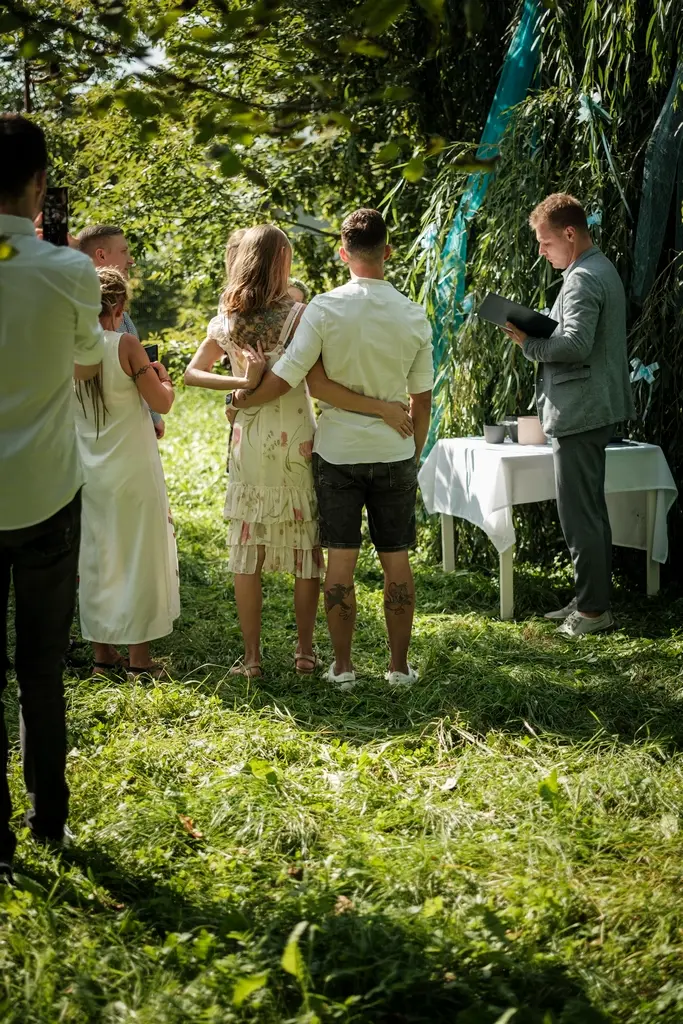
Why is it worth organizing a Welcome Ceremony?
A naming ceremony is more than a formality—it is:
A universal celebration of life that does not need to follow a religious rite
An opportunity to express feelings, wishes, and intentions for the child
A way to gather loved ones together in a special moment
A space for personal storytelling—your family’s story
It is often accompanied by touching moments, when parents, siblings, grandparents, or loved ones share wishes and heartfelt intentions for the child and their future.
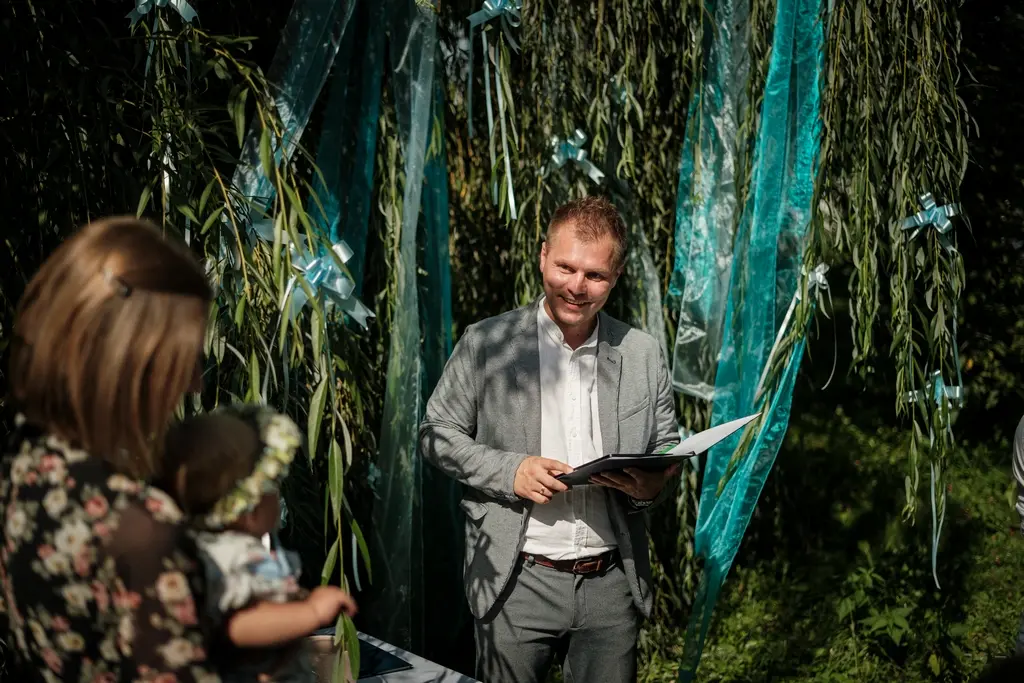
What does a Naming Ceremony look like?
Each ceremony is unique and created individually, but it may include elements such as:
- Welcoming guests and introduction
- A story about the child – sharing the beauty of the moment of their birth
- Symbolic gestures and rituals – e.g., lighting a candle, planting a tree, presenting letters for the future
- Announcement of the name and its meaning
- Wishes and reflections on family values
During the ceremony, you can speak your own words, participate in the rituals, or rely on the master of ceremonies to lead the event in a calm and attentive way.
Symbolic Rituals in a Naming Ceremony
The rituals in a naming ceremony are often a personal and deeply symbolic part of the event. They may include:
- Lighting a candle together, symbolizing light and life
- Planting a tree or plant as a sign of hope and growth
- Letters to the future – from parents or loved ones
- Family rituals that convey values and memory
What you choose can be inspired by your story, traditions, or dreams—there are no limits.
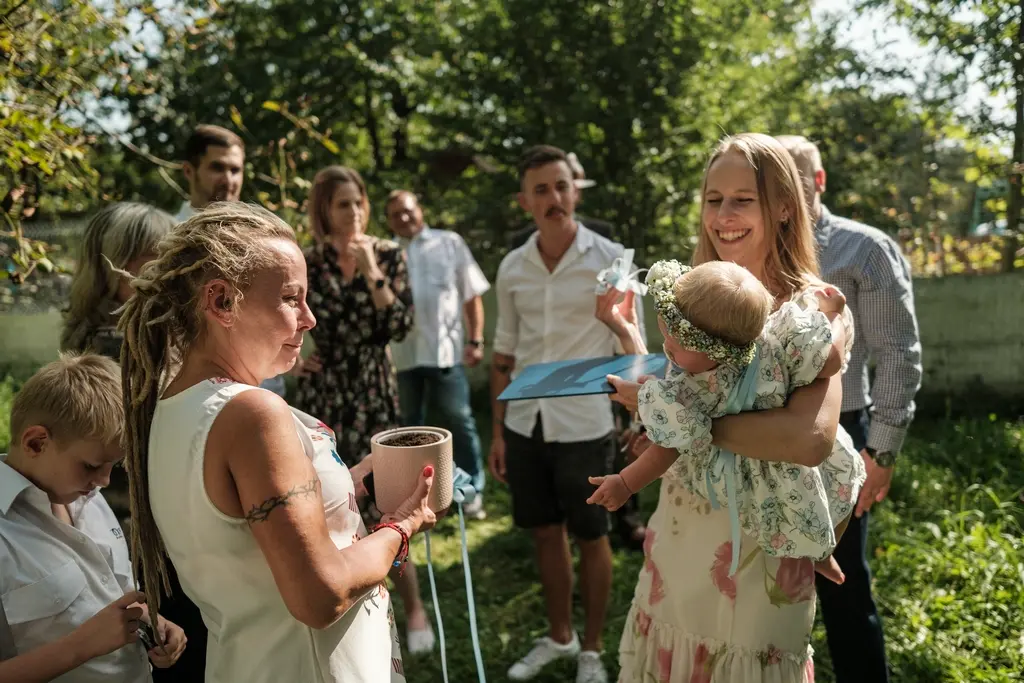
Honorary Parents – an important, symbolic role for close loved ones
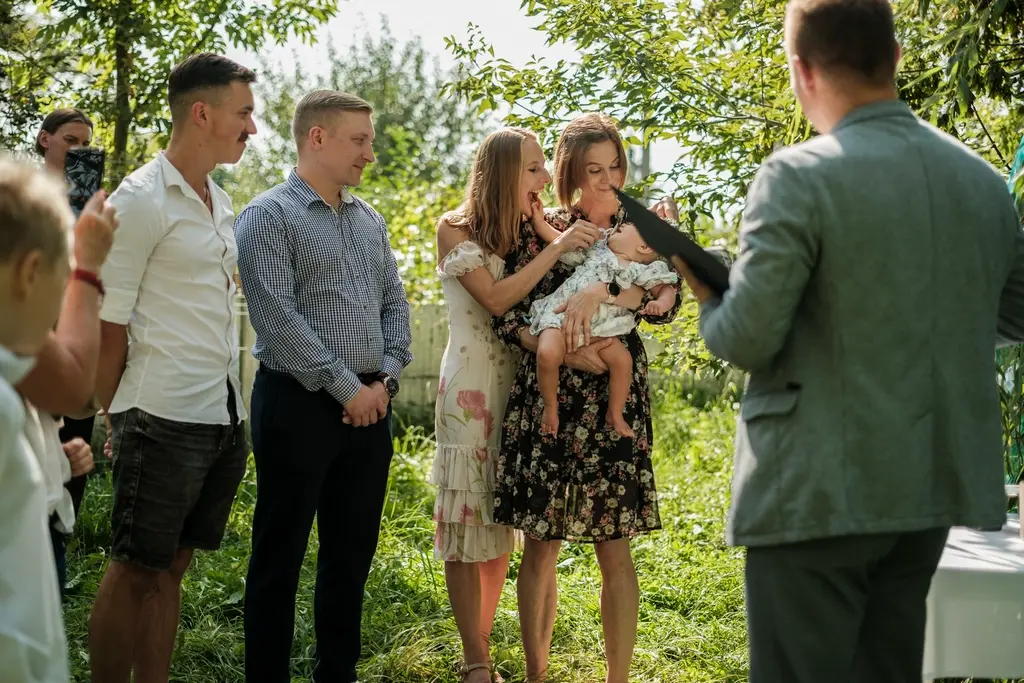
Honorary Parents are people chosen by the child’s parents as particularly important figures in their life. Their role in the naming ceremony is symbolic and emotional—it is not connected to religion or formal obligations.
During the naming ceremony, Honorary Parents may:
- Be symbolically introduced as part of the family community
- Offer wishes or a few words addressed to the child
- Participate in a chosen symbolic ritual
- Present a keepsake or letter for the future
Unlike godparents, Honorary Parents do not have any religious or legal function. Their presence is based solely on relationship, closeness, and the values they wish to pass on to the child.
This element of the ceremony emphasizes that the child is surrounded from the very beginning by care, support, and attention from loved ones, making the naming ceremony a truly personal and meaningful event.
Who is this ceremony for?
The naming ceremony is perfect for families who:
- Value the freedom to shape the script and symbolism
- Wish to celebrate the arrival of their child in a deeply personal way
- Want to create an event full of meaning and shared memories
- Regardless of faith or worldview
- Wish to involve family and loved ones in the celebration
Frequently Asked Questions About the Naming Ceremony
FAQ
No. A naming ceremony is purely symbolic and has no legal effect. The official naming of the child and the assignment of a personal identification number (PESEL) take place at the Registry Office, independently of this ceremony.
A naming ceremony is non-religious. It is open to families of all beliefs and allows you to fully create your own script, rituals, and content for the event, without reference to any doctrine or religious rites.
A naming ceremony typically lasts 20 to 40 minutes, depending on the chosen script, the number of rituals, and the involvement of loved ones (e.g., wishes, letters, or family speeches).
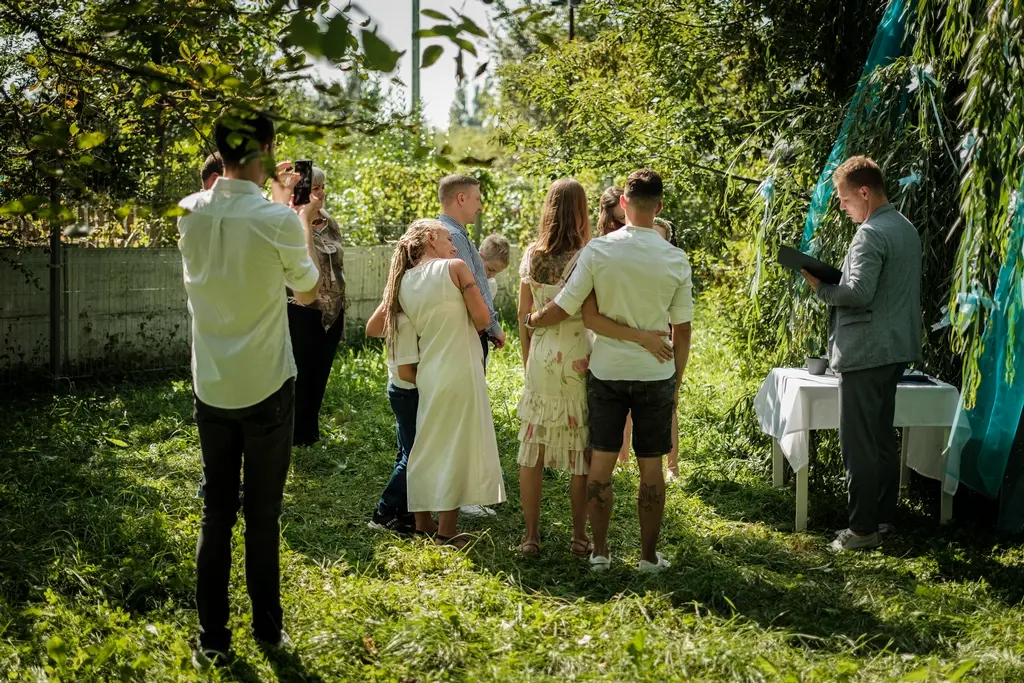
The ceremony can take place anywhere that is meaningful to you—at home, in a garden, outdoors, in an event hall, or any other special location. There are no formal restrictions on the venue.
Yes. Loved ones often participate in a naming ceremony, including grandparents, siblings, friends, or individuals serving as Honorary Parents. They may offer wishes, take part in rituals, or present keepsakes to the child.
No. A naming ceremony can be organized for both infants and older children. The script is always adapted to the child’s age and the nature of the celebration.
Of course. A naming ceremony is fully personalized. You can prepare your own texts, rituals, and ideas, or use our experience to create a cohesive and beautiful celebration together.
Yes. A naming ceremony is often combined with a family gathering, reception, or another celebration, creating a natural and cohesive day of celebration.