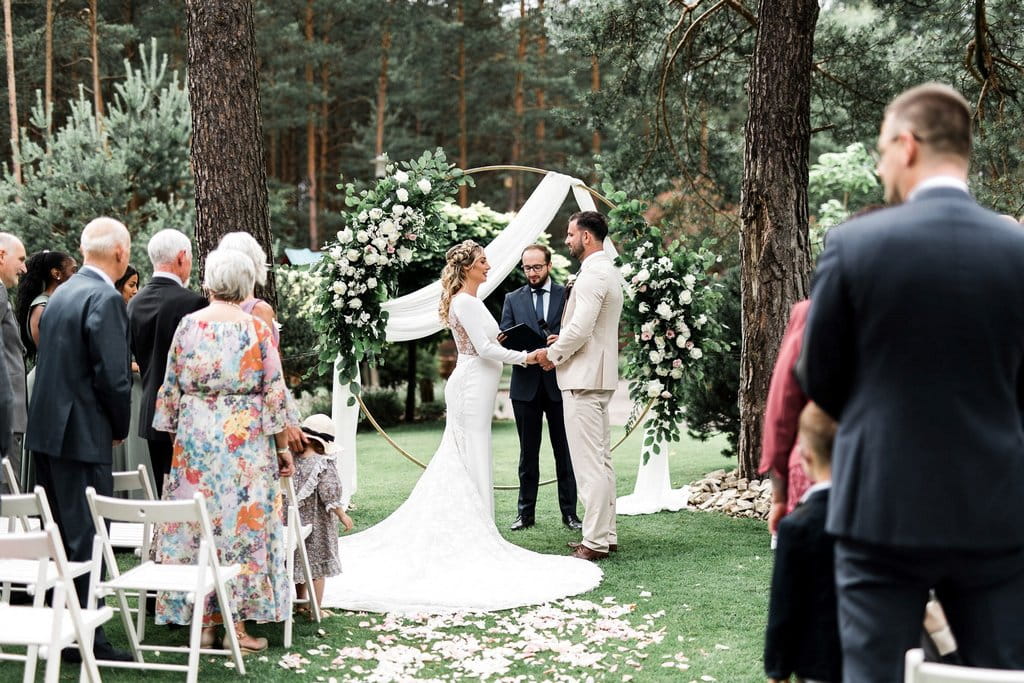

A variety of ways to celebrate
Every ceremony can look different. Your story is unique, as are your values, needs, and dreams for this special day. That’s why we create symbolic and humanist weddings that don’t follow rigid rules, but instead focus on emotions, relationships, and the meaning of the moment.
Whether you’re planning an intimate outdoor celebration or a large gathering with loved ones, we will craft a ceremony that feels authentic and entirely yours.
What are symbolic and humanist ceremonies?
Symbolic and humanist ceremonies are celebrations that don’t have legal standing but carry great emotional and personal value. Their biggest advantage is complete freedom—in form, content, and location.
There’s no fixed script or imposed formula. Each ceremony is created individually, based on conversations, your story, and what you want to express to each other and to your guests.
This type of celebration is chosen by couples who:
- want to give the event a deeper, personal meaning
- value authenticity and sincerity
- are looking for an alternative or complement to a civil ceremony
- dream of a ceremony outdoors or in a non-traditional location
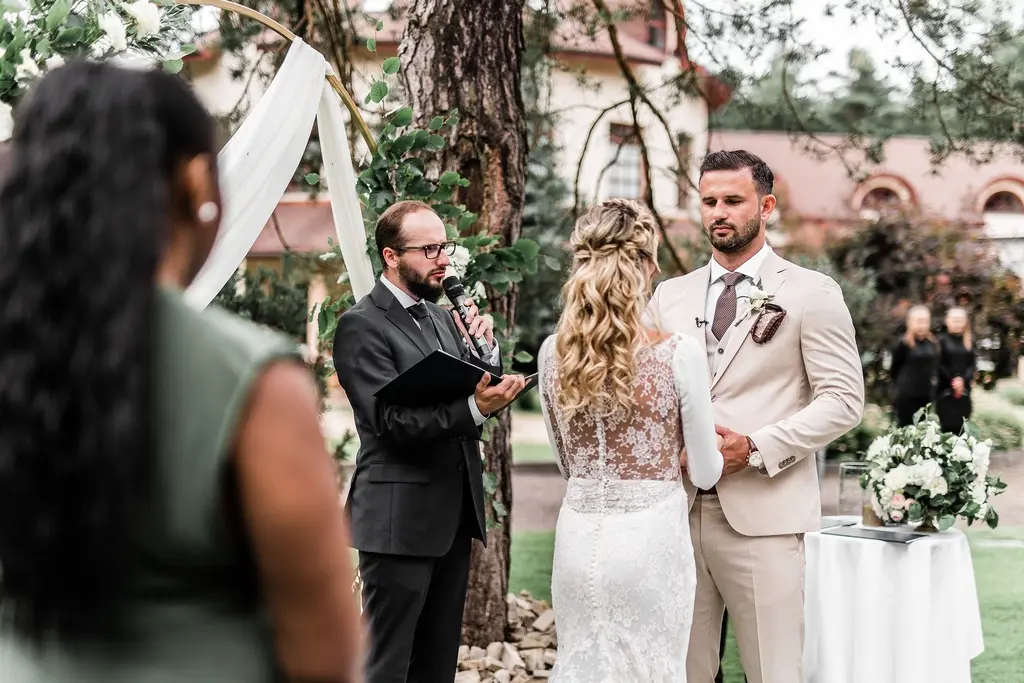
Symbolic wedding vs. humanist ceremony
Although the terms “symbolic wedding” and “humanist ceremony” are sometimes used interchangeably, in practice they do not mean exactly the same thing.
Simply put: a symbolic wedding is a broader concept, while a humanist ceremony is a specific type of symbolic wedding.
Neither form has legal effect in Poland, and if you want a legally recognized marriage, a civil wedding is required. However, the ceremonies differ in philosophy, emphasis, and the way their content is crafted.
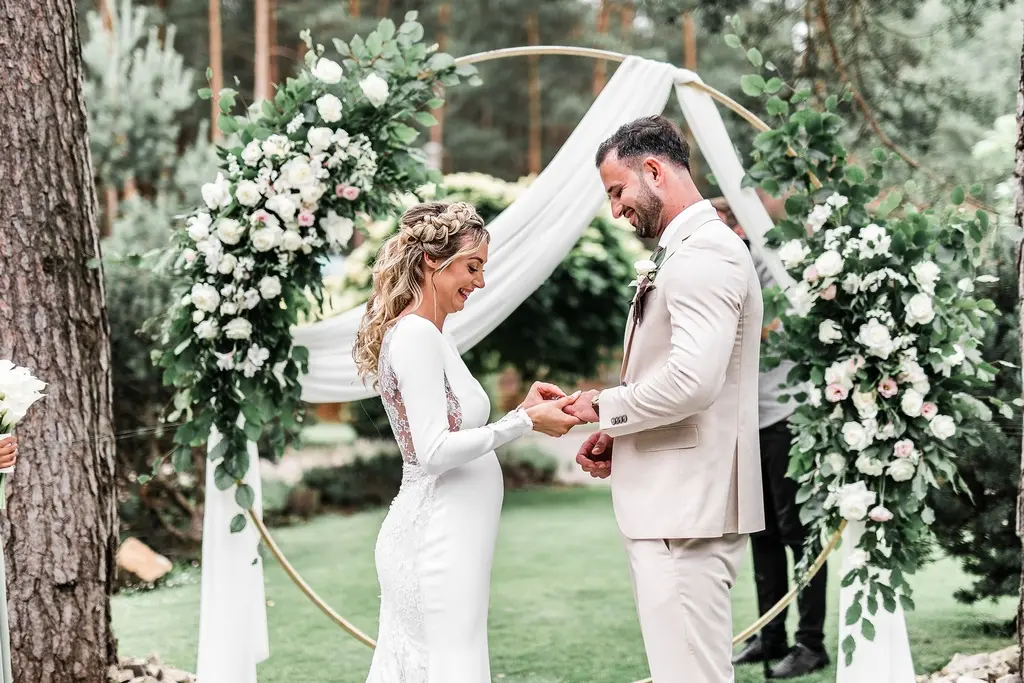
What is a symbolic wedding?
A symbolic wedding is an informal celebration that serves as an alternative or complement to a civil wedding. Its greatest advantage is complete freedom of form—without legal or religious constraints.
Such a ceremony can take many different forms:
- Romantic and classic
- Themed or stylized (e.g., inspired by a movie, an era, or a particular motif)
- Minimalist or elaborate
- Universally non-religious
It is conducted by a master of ceremonies or celebrant, and the script is created based on your expectations, aesthetic preferences, and vision for the day.
What makes a humanist ceremony unique?
A humanist ceremony is a specific type of symbolic wedding based on the values of humanism, such as:
- Human dignity
- Freedom of choice
- Individual happiness and growth
- Authenticity of relationships
At the heart of the ceremony is the person and their story. It is a form of celebration that particularly emphasizes:
- The individuality of the couple
- The uniqueness of their relationship
- The importance of personal values and experiences
A humanist ceremony is usually highly personalized: it can include personal vows, stories about your journey, favorite music, custom rituals, and non-traditional locations.
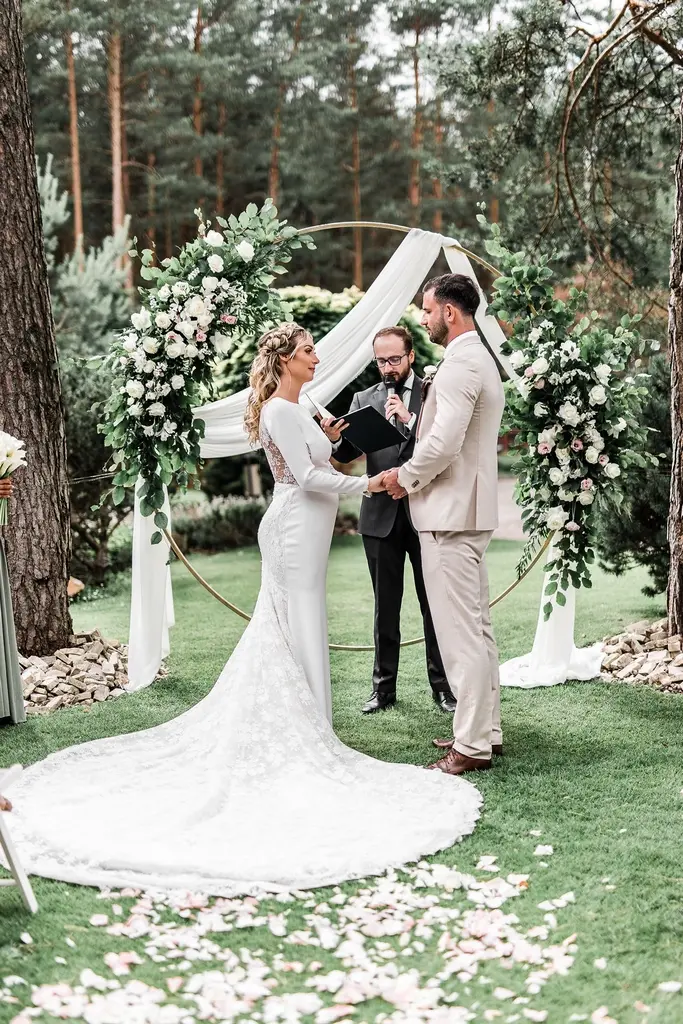
Key similarities and differences
What do both forms have in common?
- No legal effect
- Complete freedom of location and style
- Can be combined with a civil ceremony
- High level of personalization
What sets them apart?
- A humanist ceremony has a clear ideological core based on the philosophy of humanism.
- A symbolic wedding can be based on other themes: aesthetic, cultural, personal passions, or universal values.
- In a humanist ceremony, the narrative and meaning are more important than the form itself.
An outdoor wedding anywhere you dream
One of the greatest advantages of symbolic and humanist ceremonies is complete freedom of location. The ceremony can take place:
- In a garden
- In a forest or park
- On the beach
- In the mountains
- In a wedding hall or private venue
You don’t have to fit into official frameworks – the location adapts to your vision. We also assist with organizational and logistical matters to ensure the ceremony runs smoothly and peacefully.
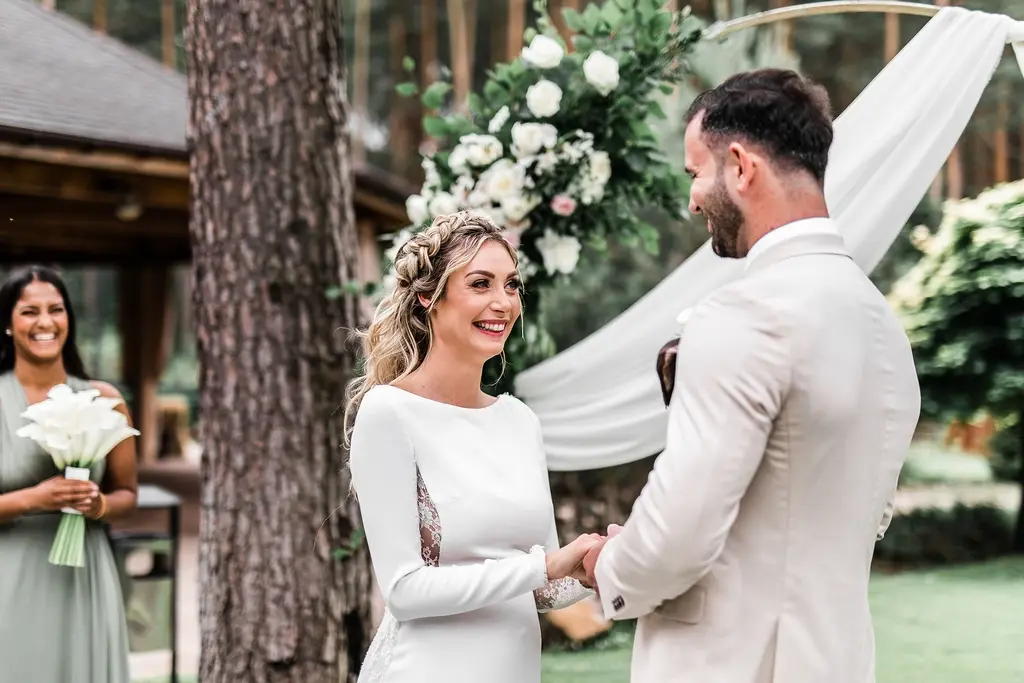
Alongside your legal ceremony
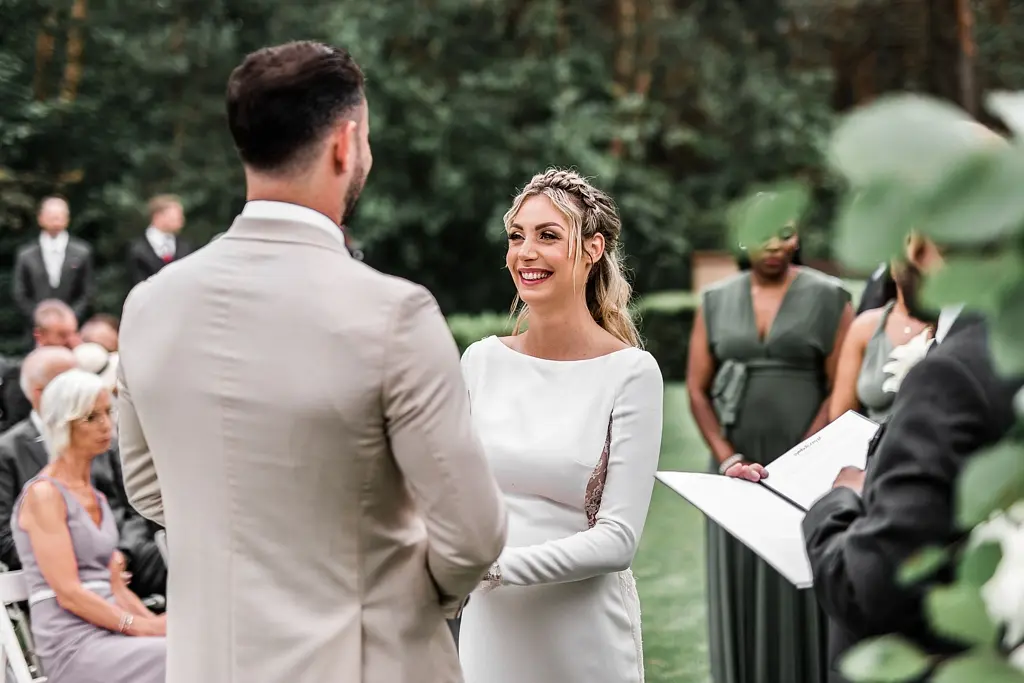
More and more couples are choosing to combine a symbolic or humanist ceremony with a formal civil wedding—either on the same day or on a different date.
This approach allows you to:
- Maintain legal validity
- Create a personal, emotional celebration
- Separate the official aspect from the symbolic experience
Depending on your situation, we can help plan:
- A complementary ceremony
- A ceremony following the civil wedding
- A narrative celebration focused entirely on your story
How is a ceremony prepared, step by step?
Getting to know you
We get to know you, your expectations, and your vision for the ceremony.
Crafting the ceremony
Based on the information we’ve gathered, we prepare a personalized ceremony program.
Perfecting every detail
Rituals, vows, the involvement of loved ones, music – everything cohesive and thoughtfully planned.
On the day of your celebration
We ensure a calm atmosphere and a smooth, seamless flow of the event.
Who are our ceremonies for?
Our offer is aimed at couples who:
- Are looking for an authentic alternative to traditional forms
- Want the ceremony to be an experience, not just a formality
- Value an individual approach and a calm atmosphere
- Want to invite their loved ones to actively participate in the ceremony
You don’t need to have a ready-made vision – we will create it together.
Let’s talk about your ceremony
Every ceremony begins with a conversation.
Tell us about yourselves, and we will propose a form that best reflects your story.
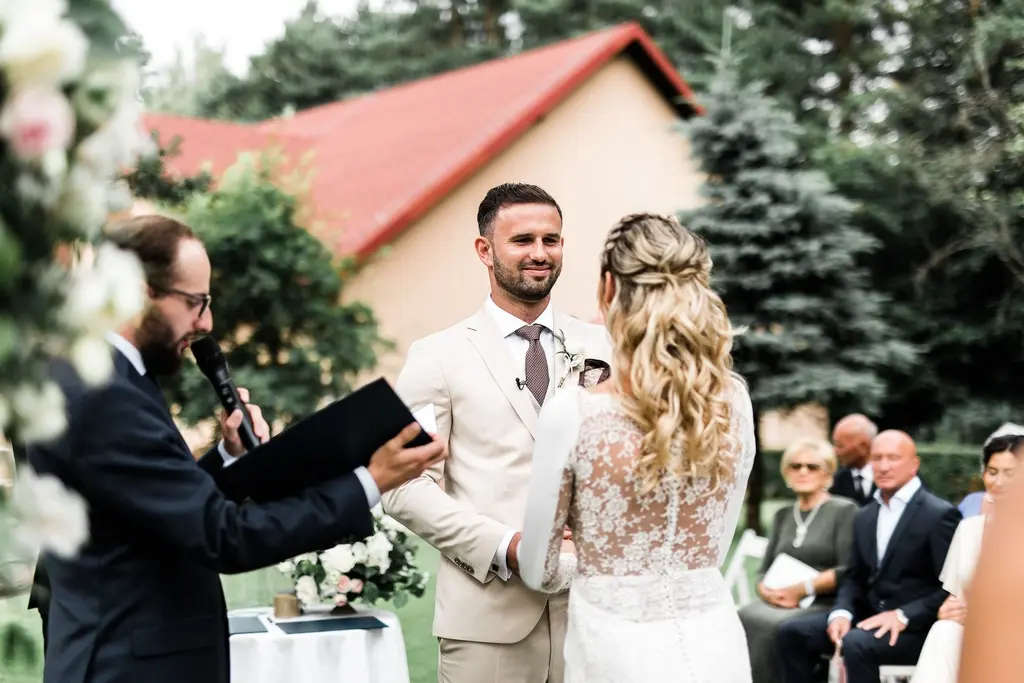
Frequently Asked Questions About Symbolic and Humanist Weddings
FAQ
No. Neither a symbolic nor a humanist ceremony has legal effect in Poland.
If you want to enter into a legally recognized marriage, a civil wedding at the Registry Office is required. A symbolic or humanist ceremony can take place before, after, or on a different date, independently of the legal formalities.
Yes. Many couples choose to combine both forms.
With the consent of the Registry Office, we can conduct a combined ceremony. It usually looks like this:
- The civil wedding takes place first, followed by a symbolic part that completes the ceremony.
- The civil ceremony is integrated into the symbolic ceremony while respecting the official requirements.
We help plan this type of ceremony in a way that is cohesive and comfortable.
A symbolic wedding is a broader concept, encompassing any informal ceremony without legal effect.
A humanist ceremony is a specific type of symbolic wedding—it focuses on humanist values, places the person at the center, and involves a deeply personalized content.
In practice, we discuss the differences together and help you choose the form that best suits you.
No. One of the greatest advantages of symbolic and humanist ceremonies is complete freedom of location.
The ceremony can take place:
- Outdoors (garden, forest, beach, mountains)
- In a wedding hall
- In a private venue
- In a location meaningful to your story
There are no formal restrictions.
The level of personalization is very flexible and depends on your preferences.
Together, we can plan:
- Personal vows
- Symbolic rituals
- Involvement of loved ones (readings, speeches)
- A narrative based on your story
- Custom musical arrangements
We don’t use ready-made templates—each ceremony is created individually.
The ceremony is conducted by a master of ceremonies / celebrant, who:
- Oversees the flow of the event
- Ensures a calm and smooth atmosphere
- Leads the narrative and rituals
- Supports you in the preparations
Their role is discreet—the focus is always on your story and emotions.
No. The ceremony can be:
- Very formal and elegant
- Casual and intimate
- Calm or with elements of humor
The style is tailored to you, not to a fixed template.